
Academician Shu Huai Rui: Modern fruit industry mechanization should be accelerated
Release time:
2018-09-17
What opportunities and challenges does China's apple industry currently face? How can sustainable development be achieved? Shu Huai Rui, a renowned horticulturalist, academician of the Chinese Academy of Engineering, and professor at Shandong Agricultural University, stated that the apple industry in Shaanxi and even in China has reached a critical stage of quality improvement and efficiency enhancement. Developing a modern apple industry through a path of moderately scaled operation that suits China's actual conditions, participating in global competition, and continuing to consolidate China's voice in the world's agricultural products sector are necessary requirements for supply-side reform. Reporters from the Economic Information Daily discovered through interviews in Shaanxi, Shandong, Gansu, and other regions that the global and national demand for apples has essentially reached its peak, and simply...
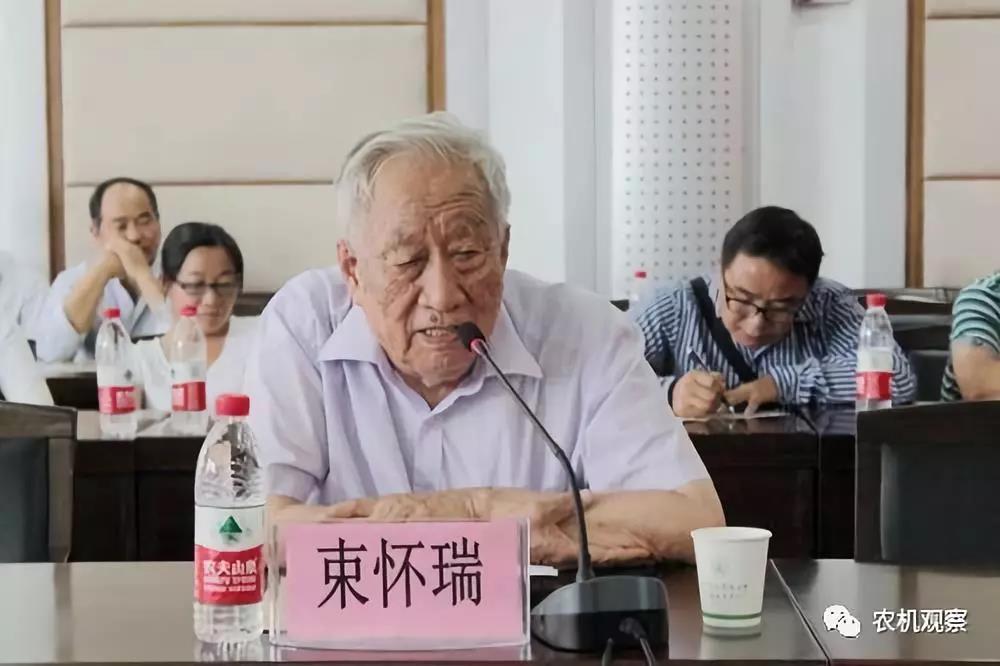
What opportunities and challenges does China's apple industry currently face? How can sustainable development be achieved?
Renowned horticulturalist, academician of the Chinese Academy of Engineering, and professor at Shandong Agricultural University, Shu Huai Rui, stated that the apple industry in Shaanxi and even China has reached a critical stage of quality improvement and efficiency enhancement. Developing a modern apple industry that follows a path of moderately scaled operations suitable for China's realities, participating in global competition, and continuing to solidify China's voice in the world's agricultural products sector are necessary requirements for supply-side reform.
Economic Information Daily reporters discovered through interviews in multiple locations across Shaanxi, Shandong, and Gansu that the global and national demand for apples has essentially reached its peak. Unceasing expansion in scale will inevitably lead to price drops and unsold produce. Therefore, nationwide, limiting planting area and improving product quality, and pursuing a path of high-yield, high-quality modern agriculture is the only way for the apple industry to achieve sustainable development.
Shu Huai Rui believes that the apple industry currently faces five particularly prominent issues that require sufficient attention.
Firstly, the apple industry is facing "double pressure" from high domestic production costs and a sharp increase in imports of relatively high-quality and low-priced foreign apples.

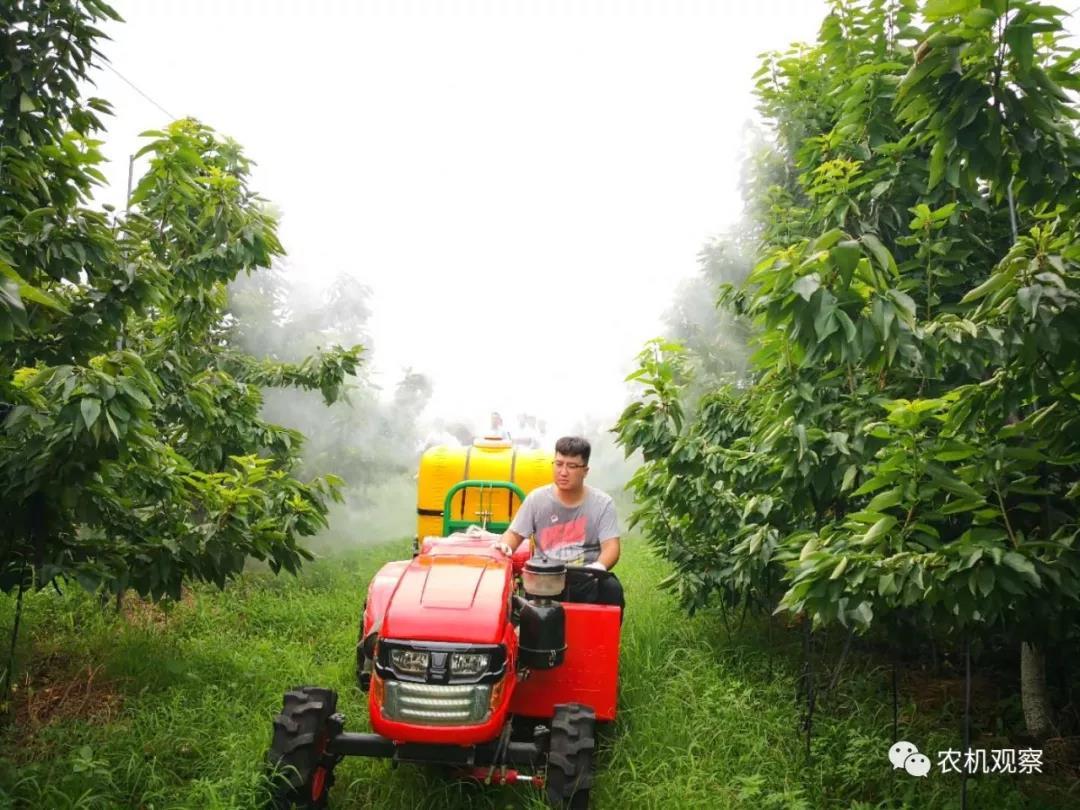
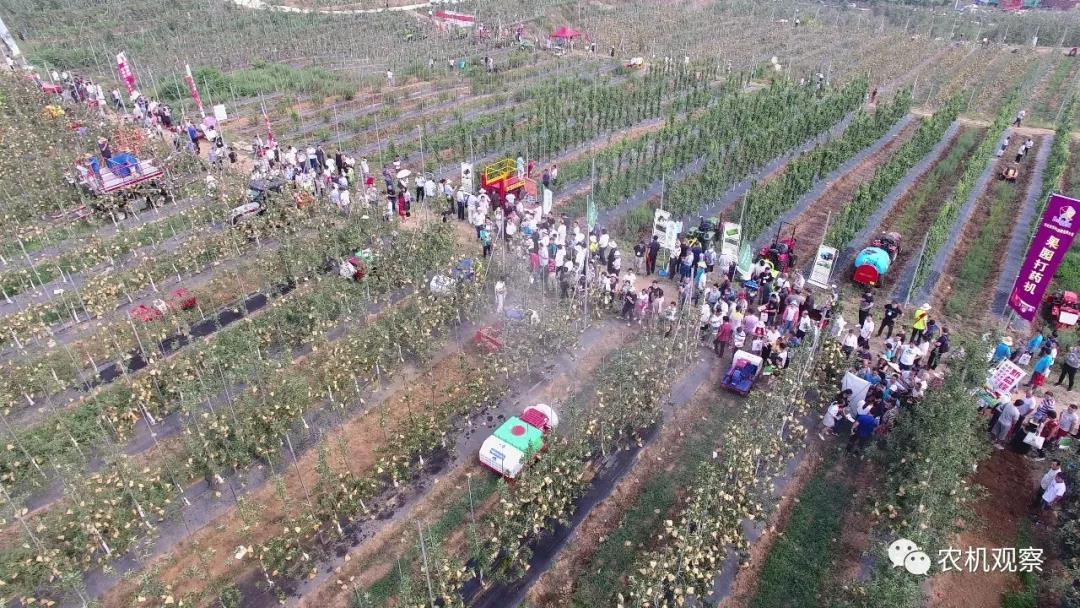
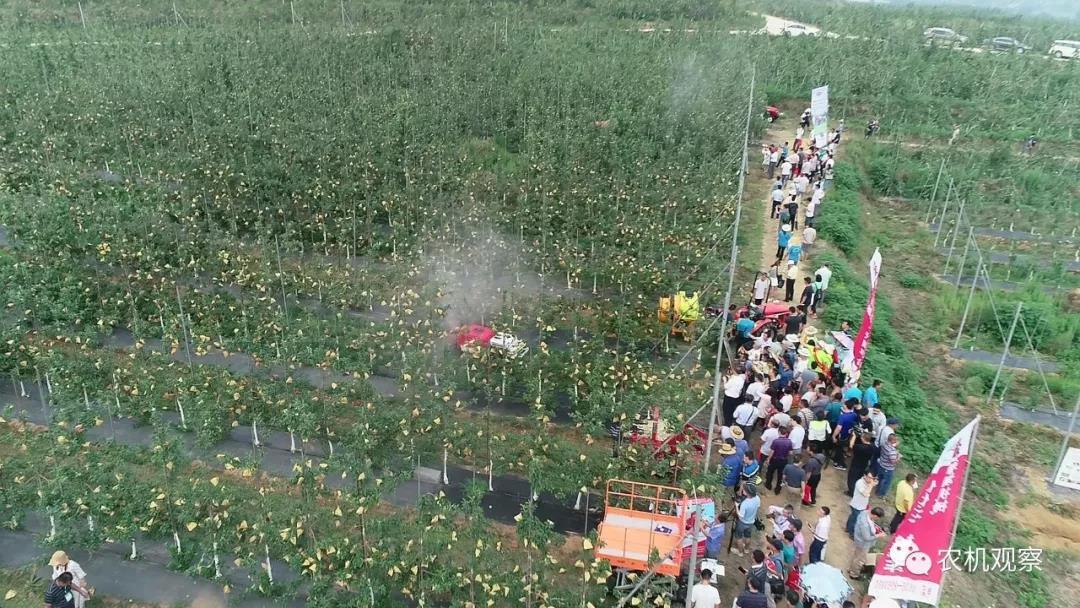
Shu Huai Rui said that due to the low utilization and popularization rate of modern fruit industry machinery, including seedling planters, root-brushing machines for layering nurseries, and multi-functional three-wheeled tractors for nurseries, basic production processes such as fertilization, spraying, harvesting, pruning, and trimming still rely on manual labor. In the past three years, the cost of labor and production materials in Shaanxi and nationwide has shown an upward trend. Statistics show that if the field purchase price of apples in Shaanxi and other parts of the country cannot reach more than 2 yuan per kilogram, farmers will not profit; while the landed price of Polish apples is only slightly over 1 yuan per kilogram.
Secondly, there is an imbalance in variety structure.
Among the total 11 million mu of orchards in Shaanxi, high-density cultivation accounts for over 90% of the total area, with orchards over 15 years old reaching 4 million mu. In addition, the dominance of Red Fuji apples is widespread, accounting for over 70% of the total planting area. The combination of early, mid, and late-maturing varieties is unreasonable, with 70% of the area and 80% of the yield in Shaanxi currently dominated by late-maturing varieties. The proportion of fresh-eating and processing varieties is not coordinated, with over 90% of varieties primarily for fresh consumption, and the construction of processing-specific bases lagging behind.
Thirdly, the application of organic fertilizers is generally insufficient.
Shu Huai Rui said that Shaanxi and other fruit-producing areas nationwide face the predicament of insufficient total input of organic fertilizers. Due to the extensive use of chemical fertilizers, the organic matter content of orchard soil in Shaanxi is generally around 1%, far lower than the average level of 4% to 8% in developed countries. This results in an average yield of only about 1000 kilograms per mu, only one-third of that in the United States.
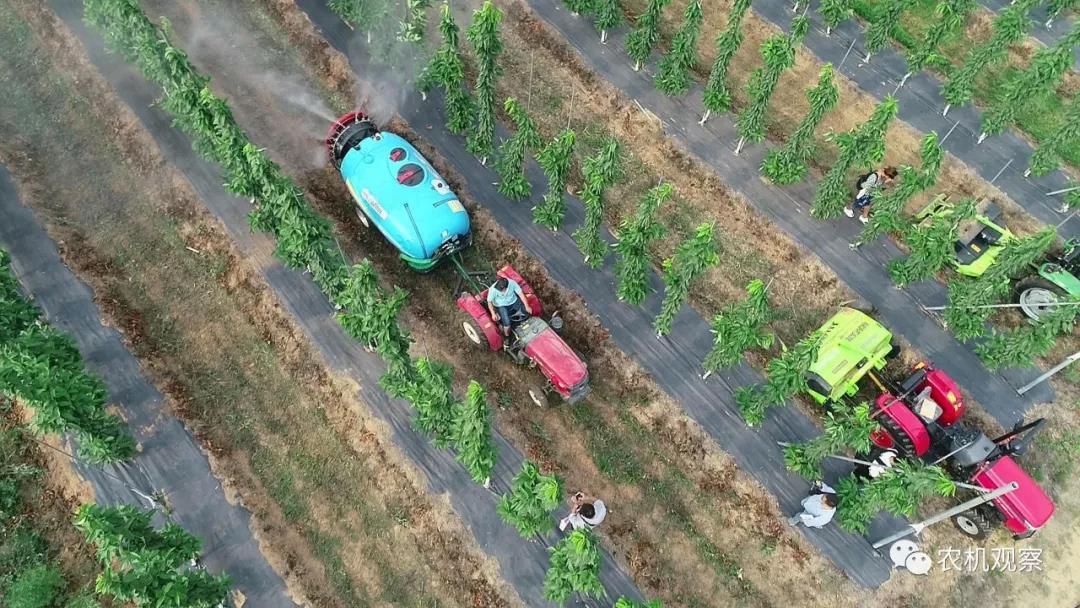
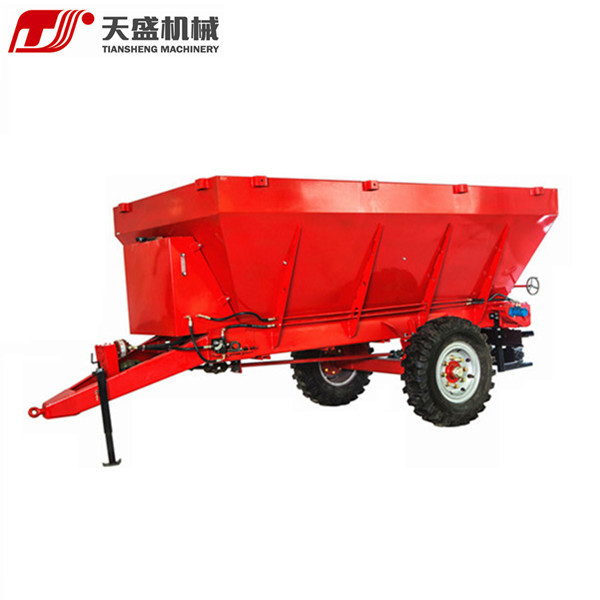
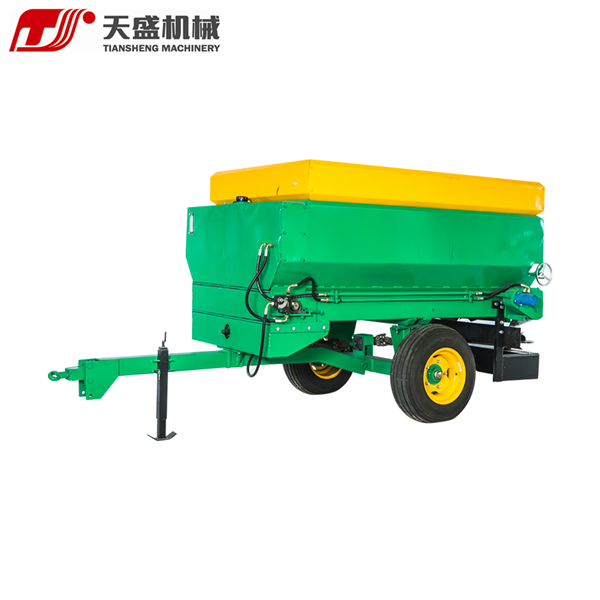
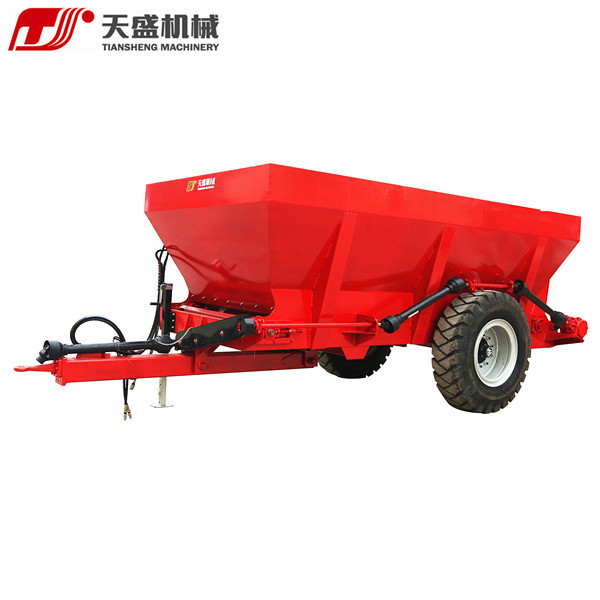
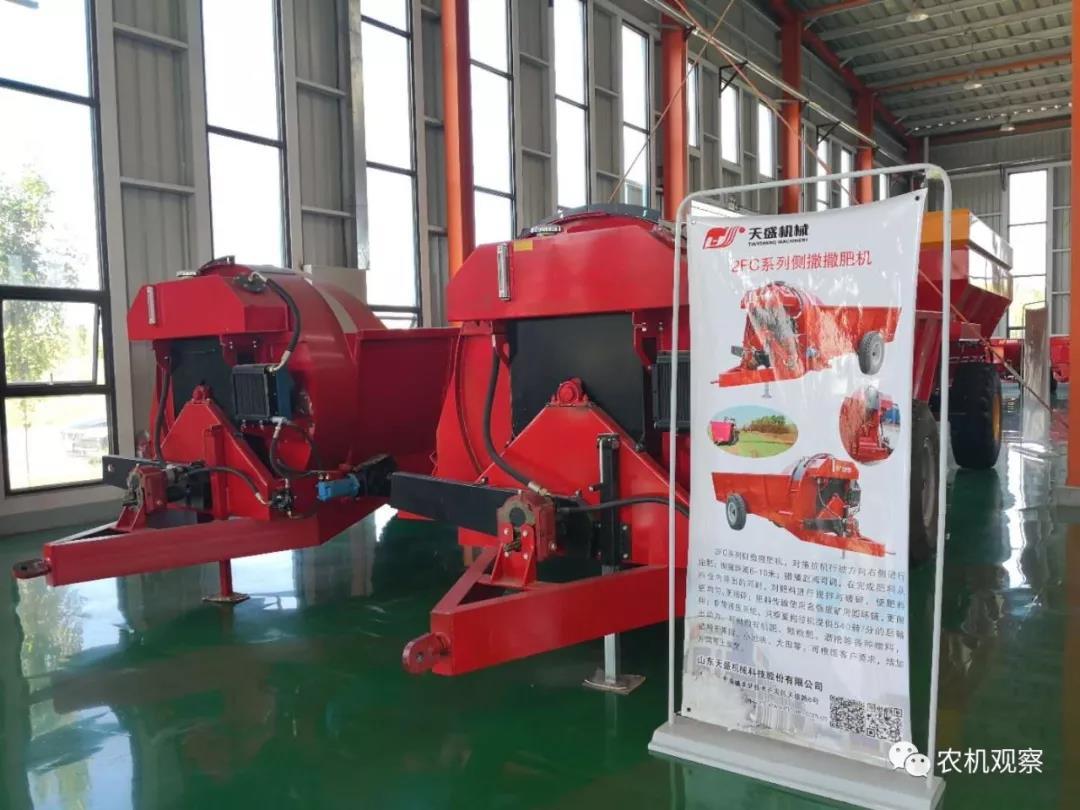
Tiansheng Machinery Manufacturing Co., Ltd., based on market demand, independently developed a series of organic fertilizer spreaders . This machine is mainly used for spreading lime, various fermented fertilizers, and organic fertilizers. The machine has superior technical performance, strong performance, wide adaptability, and high reliability.

Fourthly, the development of fruit tree seedlings is seriously lagging behind.
Shu Huai Rui said that China's annual output of fruit tree seedlings exceeds 100 million, but a large number of high-quality seedlings need to be imported from abroad. In 2016 alone, Shaanxi supervised the import of 1.8 million apple seedlings. Currently, over 60% of fruit tree seedling production and operation in Shaanxi is carried out by family nurseries. They often use scions from orchards that have not undergone variety identification, have low purity, and suffer from serious pests and diseases. They do not consider the compatibility, stress resistance, and adaptability between rootstock and scion, resulting in poor quality seedlings.
Fifthly, the level of industrialization is too low.
Shu Huai Rui said that Shaanxi's fruit storage capacity accounts for only 30% of the total output, less than half that of developed countries. Apple processing is mainly focused on primary products and raw material supply, with insufficient development of deep-processed products. At the same time, Shaanxi is constrained by administrative divisions and regional jurisdictions, unable to form a strong overall brand image. Moreover, the quality varies significantly across the 6 cities and 43 counties (districts) covered by apple cultivation.

Shu Huai Rui stated that based on the analysis of recent years, high-end, high-quality fruits are in high demand and sell well, while low-end, inferior fruits are difficult to sell at a good price. This indicates problems with the effective supply of apples, and coupled with the sharp increase in imported fruits, the risks in the development of the apple industry are increasing.
He said that the sustainable development of the apple industry in Shaanxi and even nationwide urgently needs to break through from the following four aspects.
Firstly, pursue moderately scaled production and operation.
He said that unlike foreign countries where the average household production often reaches hundreds or thousands, or even over ten thousand mu, the average household in Shaanxi operates only 6 to 7 mu of orchards, mostly located in mountainous areas. However, this also makes it possible for farmers to manage each apple well, producing nutritious, organic, green, safe, and attractive high-end fruits. Pursuing moderately scaled operations of around 50 to 100 mu is a viable option.
"We should guide farmers towards high-end apple cultivation, increase the construction of export fruit bases, and establish various specialized production bases, including concentrated apple juice raw materials and fresh-eating apples, in different regions. We should prevent the phenomenon of farmers rushing to plant apples and then uprooting them en masse due to market or weather reasons." Shu Huai Rui said.
Secondly, continuously promote technological innovation.
Shu Huai Rui said that the development of each apple variety, from research to final production, takes at least twenty years. Among the more than 100 apple varieties in China, only a few can be planted on a large scale for a long time and are accepted by farmers and experts. However, the market demands a variety of varieties with different maturity times. Therefore, suitable planting areas should be strictly identified, advantageous varieties should be determined according to local conditions, the scale of early and mid-maturing varieties should be expanded, and the risk of the "single dominance" of Red Fuji should be gradually reduced. At the same time, efforts should be made to strengthen the protection of intellectual property rights for new varieties such as Ruiyang and Ruixue, protecting native advantageous varieties.
Thirdly, increase the cultivation and level of skilled, well-managed, craftsman-like labor.
He said that as fewer and fewer young people from "second-generation fruit farmers" and "third-generation fruit farmers" are willing to return to their hometowns to farm, the lack of skilled labor is foreseeable. Therefore, cultivating professional new-type fruit farmers in the field of fruit trees in agriculture, allowing those who are willing and have the capacity to carry out large-scale, standardized, and technical operations, is a necessary condition for the development of the modern fruit industry.
Fourthly, it emphasizes the building of fruit product integrity and brand building.
He said that currently, the annual output of high-end apples nationwide only accounts for 25% of the total apple output, and the low rate of high-quality fruits is currently a shortcoming in apple production nationwide. Therefore, each fruit producing area should increase the number of fruit selection lines and the construction of cold storage and CA storage, eliminate counties without these facilities, and transfer to sales areas, creating a "green, organic, safe, and nutritious" Shaanxi apple brand, and strive to continuously produce high-quality apples. Only in this way can the sustainable, healthy, and rapid development of the Shaanxi apple industry be guaranteed.


I. Time and Location
Time: October 26, 2018, afternoon
Location: Wuhan International Expo Center, Hubei Province (619, Yingwu Avenue, Hanyang District)
II. Conference Organization
Organizer:
China Agricultural Machinery Circulation Association
Undertaker:
Agricultural Machinery Branch of China Agricultural Machinery Circulation Association
Fruits, Vegetables and Tea Machinery Branch of China Agricultural Machinery Circulation Association
III. Agenda
1. New Technologies and Machinery for Northwest Apple Orchard Mechanization
——Professor Yang Fuzeng (Northwest A&F University)
2. Key Technologies and Equipment for Mechanized Fruit Tree Seedling Propagation
——Professor Yang Xin (Hebei Agricultural University)
3. Mechanized Harvesting Technology for Actinidia arguta
——Professor He Junlin (Shanxi Agricultural University)
4. Orchard Establishment Plan Based on Mechanization
——Deputy Director Si Peng (Zhengzhou Fruit Research Institute, Chinese Academy of Agricultural Sciences)
5. Current Status and Thoughts on the Mechanization Development of Gansu's Characteristic Forestry Fruits
——Professor Huang Xiaopeng (Gansu Agricultural University)
6. Current Status and Development Direction of Orchard Mechanization in Xinjiang Production and Construction Corps: Taking Fertilizer Applicators as an Example
——Researcher Jia Shouxing (Xinjiang Academy of Agricultural Reclamation Sciences)
7. Thoughts on the Current Status and Development Trend of Peach Orchard Production Mechanization
——Associate Professor Zheng Wenzhong (Zhejiang University)
8. Tree Shapes and Shaping Methods Suitable for Mechanized Management
——Researcher Li Bo (Shandong Fruit Tree Research Institute)
Welcome industry colleagues to actively participate in the meeting. Conference Contact: Deputy Director Yuan Tongbao, Tel: 18810759960 (Same as WeChat, please add remarks: Name, Unit, Position) Email: 328894044@qq.com
More news


CONTACT:
E-mail:info@cnplough.com
Address: No. 6, Tiansheng Road, High-tech Development Zone, Yucheng City, Shandong Province
All rights reserved © Shandong Tiansheng Machinery Technology Co., LTD Privacy Policy Legal statement